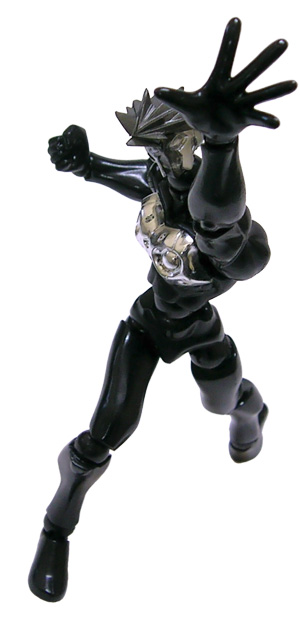
Review: Mattel Masters of the Universe Modulok
Mattel’s Masters of the Universe should never have been as popular as it was in the 80s. A culmination of two years of design and 17 research studies, it nonetheless comes across as a line designed by people who had a very low opinion of kids’ tastes.
Bow-legged, overly muscular, oddly proportioned and modestly articulated, the figures were goofy even by 80s standards. Compared to action figures that preceded them (like the original G.I. Joe) the MOTU figures were a definite step back and compared to other action figure lines available then (like the G.I. Joe: A Real American Hero line), MOTU seemed doomed to failure.
Yet, spurred by the Filmation series, the line somehow managed to entrance the younger kids. At its height in 1985, MOTU boasted US$400 million in sales and Mattel noted (with what one supposes is wide-eyed amazement) demand for the figures surpassed that for Barbie. The writing was on the wall, however, as Hasbro’s Transformers had showed up by then.
The cunningly marketed Takara-engineered Transformers figures were far cleverer than most toy lines back then and Hasbro cleaned up as both Mattel and He-Man began losing their power. Hasbro surged past Mattel in 1985 to be the number one toy company and MOTU, despite selling 125 million figures in the three years since its debut, needed new ideas. Mattel’s response was to introduce its own transforming figure for its flagship boys’ line.

Read more
Review: Toy Wars

“Increasingly, a small group of executives determined how the children of the world would play. … This is in the best interests of capital, not kids.” — author’s note.
Despite toys being a USD67 billion market worldwide, the toy industry doesn’t get much mainstream coverage ordinarily. There was a flurry of reports during the recent safety scares and there’ll usually be an article or two whenever the larger toy companies announce their financial results but by and large, there’s little coverage and less scrutiny because it’s not seen as a beat that makes journalistic careers. It’s a pity because there are great stories to be told as G. Wayne Miller shows with his 1997 book, Toy Wars.
Miller approached Alan Hassenfeld, then the chairman and CEO of the world’s number one toy company, with the intention of spending two years writing a book about Hasbro’s crown jewel, G.I. Joe, the very first action figure and iconic boy’s toy. Miller took five years to write his book after realising there were bigger stories.
Read more